
Loading...
Serving Mission, TX and surrounding areas. (956) 391-1529
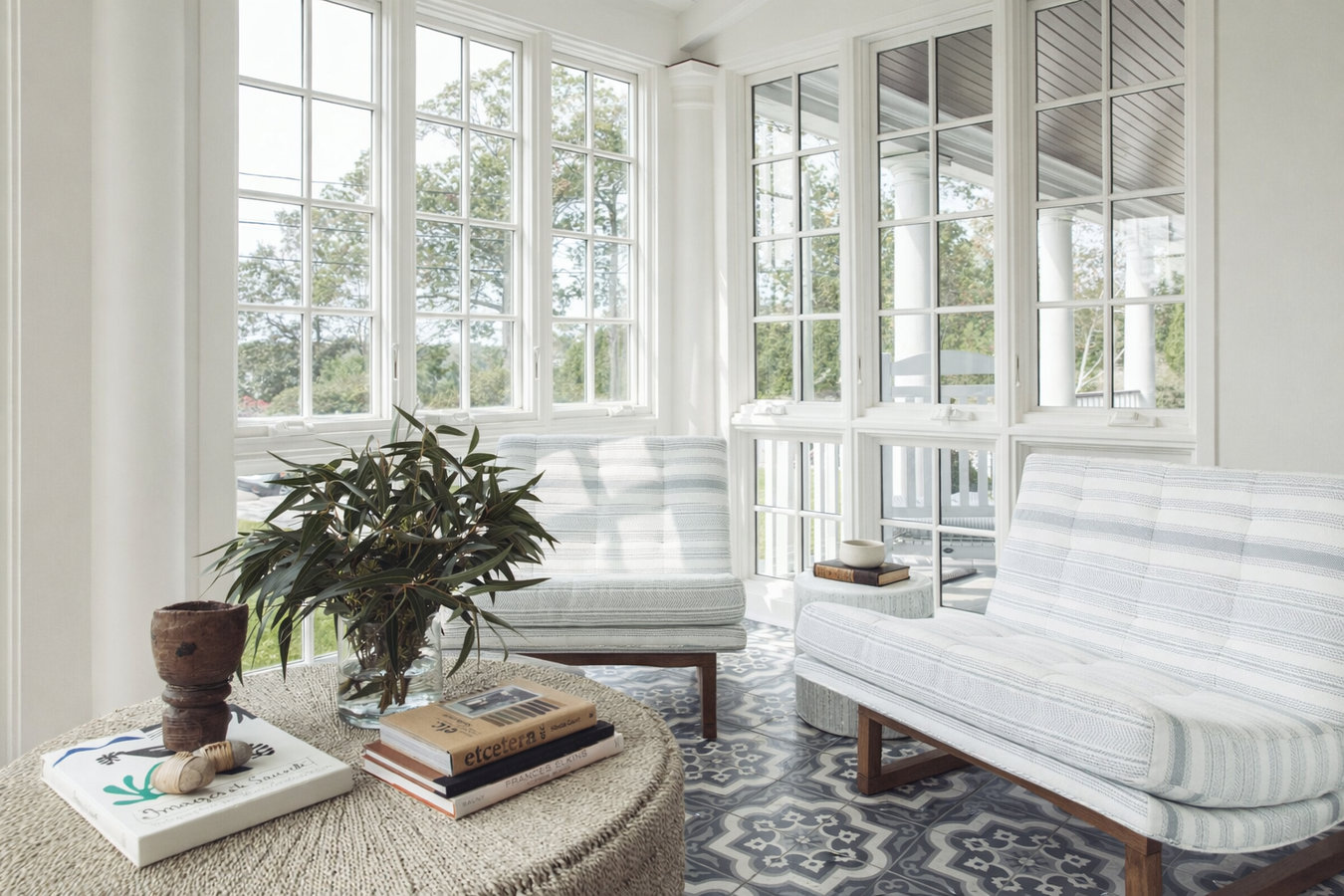
Most sunrooms fail in South Texas because the design ignores the climate. We plan around Mission's heat, clay soil, and HOA requirements before anything gets built.
Sunroom design in Mission, TX starts with a conversation about how you plan to use the space, then moves through site assessment, glazing selection, permit drawings, and HOA documentation before a single nail goes in. Most homeowners who take time on the design phase end up with a room they use every day - most who skip it end up with a room they avoid by May.
The decisions that matter most in Mission's climate are the window glazing and the cooling connection. Get those right in the design phase and the room stays comfortable year-round. Rush past them and you have an expensive greenhouse. For homeowners who already know what style they want, vinyl sunrooms are one of the most popular finished products because they are low-maintenance and built to handle the humidity here.
Whether you are starting from scratch or rethinking a screened porch that has seen better days, a thorough design process protects you from the two most common regrets in this market: a room that is too hot to use and a room that was not permitted correctly.
If the heat keeps you inside for most of the year and your patio goes unused for months, a climate-controlled sunroom solves that - but only if the glazing and cooling are designed for Mission's conditions, not national averages. A generic design will land you in the same situation with a bigger investment at stake.
Older screen enclosures in Mission's humid subtropical climate deteriorate faster than in drier parts of Texas. If screens are torn, frames are rusting, or the structure is pulling away from the house, that is a practical signal to replace rather than patch - and to replace with something better.
A sunroom with proper south-facing glazing and climate control is genuinely different from any interior room in your home - the natural light quality is something you cannot replicate with fixtures. Many homeowners find they use the space far more than they expected once it is built right.
A permitted, well-documented sunroom addition increases your home's appraised square footage and appeals to buyers who understand the value of year-round outdoor living in the Rio Grande Valley. An unpermitted one can complicate closing with your buyer's lender at exactly the wrong moment.
Our design process covers everything from the first site visit through permit-ready drawings and HOA submission packages. We look at your existing foundation and exterior wall, assess the soil conditions, and recommend glazing rated for Mission's solar heat gain - not just the standard spec. For homeowners who want the most flexibility in shape, size, and finish, our custom sunrooms service extends the design work into a fully bespoke build tailored to your lot and roofline.
We also design for long-term stability. Mission's clay soils shift with every rain cycle, and a foundation that was not engineered for local conditions will show it within a few years. Our design work includes foundation recommendations that account for that movement, not just a generic slab spec. For homeowners who want a finished product with low ongoing maintenance, vinyl sunrooms are a popular result of this design process - durable framing, high-performance glass, and a look that holds up in the humidity without painting or sealing.
Best for homeowners who want a written recommendation for window type and solar performance rating matched to Mission's conditions.
Best for homeowners who want the City of Mission permit process to start without delays from incomplete documentation.
Best for homeowners in Mission's newer subdivisions who need architectural drawings formatted for HOA review.
Best for homeowners building on a lot with significant clay soil movement who want an addition that stays level long-term.
Mission sits in one of the hottest corners of the continental United States, and the sun angle here is steep enough to drive serious solar heat gain through any glass that is not specifically rated to resist it. A design that works in a temperate climate will produce a room you cannot enter in July. Every window recommendation we make comes with a solar heat gain number your contractor can show you on the product label - not just a brand name. The ENERGY STAR program sets verified performance standards for windows that matter especially in climates like Mission's.
Beyond heat, Mission's clay soils and HOA prevalence create design constraints that out-of-area contractors routinely underestimate. We work across the Valley, including in McAllen and Pharr, where the same soil conditions and permit requirements apply. That experience means our design work reflects what actually gets approved and what actually lasts in this area - not what looks good on paper in a cooler climate.
We ask how you plan to use the room, where on your home it would be, and roughly what your budget looks like. You do not need all the answers - we help you think through the options. We respond within one business day.
We come to your home to assess the existing foundation, exterior wall, and yard layout. We also check for HOA signage or deed restrictions early. This visit shapes the glazing recommendations and foundation approach - two things that directly affect how usable the room will be.
After the site visit, we put together a proposal covering layout, recommended window types with their energy performance ratings, foundation approach, and a written price. A good proposal will explain the reasoning behind each recommendation for Mission's climate.
Once you approve the design, we submit permit applications to the City of Mission and prepare any HOA documentation. Permit review typically takes one to three weeks. Construction follows once approvals are in hand, and a city inspector signs off on the completed work before your final walkthrough.
Free estimate, no obligation. We respond within one business day.
(956) 391-1529We specify windows by their measured solar heat gain coefficient - a number that tells you exactly how much heat the glass blocks. In a climate where the wrong glass makes a room unusable, that specificity is the difference between a room you love and one you regret.
Mission's expansive clay soil shifts with every rain cycle. Our foundation recommendations account for that movement with the same approach local engineers use for Rio Grande Valley construction - not a generic slab spec copied from a cooler climate.
We submit every permit application and prepare all HOA documentation before a board goes up. The City of Mission's Planning and Zoning Department and HOA review boards in Mission's newer subdivisions both know what a complete submission looks like - we make sure ours qualifies.
Texas requires contractor licensing for work of this scope, and you can confirm any contractor's status in about 30 seconds through the Texas Department of Licensing and Regulation. We encourage every homeowner to check before signing - it takes less time than reading this page.
Every one of those proof points matters because sunroom design in Mission is not a generic service - it is a set of specific decisions about glass, foundation, and permitting that are shaped by local conditions. We make those decisions based on what actually works here, and we put them in writing before you commit to anything.
Low-maintenance vinyl framing and insulated glass panels - a popular result of the sunroom design process for Mission homeowners who want durability without upkeep.
Learn MoreFully bespoke builds that extend the design work into any shape, size, or finish your lot and roofline allow.
Learn MorePermit slots fill up in fall - the sooner we submit your application, the sooner you are using your new room. Call or send a message today.